Different landscapes. Different hazards. One lesson: disasters can unfold as a chain of connected events.
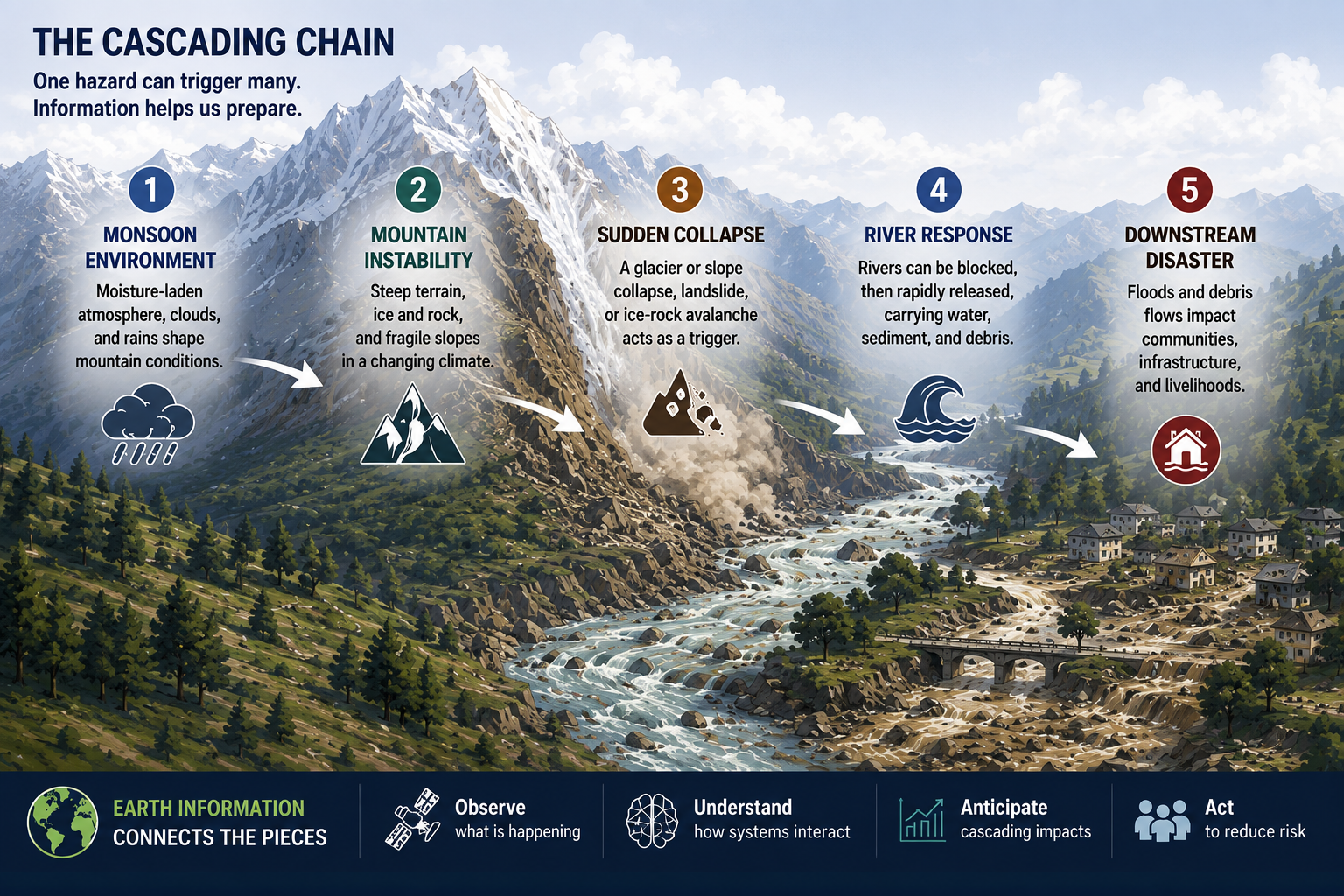
Figure 1. The Rasuwa event illustrates how hazards in complex mountain environments can cascade from one process to another, with impacts extending downstream from mountains to communities.
Last year, intense rainfall in Texas showed how quickly a weather event can evolve into dangerous flooding. In the mountains of Nepal, the chain can become even more complex.
The devastating floods in Nepal on August 26, 2026, remind us that disasters rarely have a single cause. In steep mountain environments, one hazard can trigger another: a slope or glacier-related collapse can block a river, followed by a sudden release that sends water, mud, and debris downstream.
The important point is that the cascade can move quickly from mountains to valleys and communities.
Rainfall may be part of the story, particularly during the Himalayan monsoon, but it is not necessarily the whole story. Understanding what happens requires connecting information across the atmosphere, cryosphere, land, and hydrology.
That is the purpose of Earth Information: to connect the pieces.
From rainfall to rivers, from mountains to valleys—understanding the connections can create a window to anticipate risk before a hazard becomes a disaster.